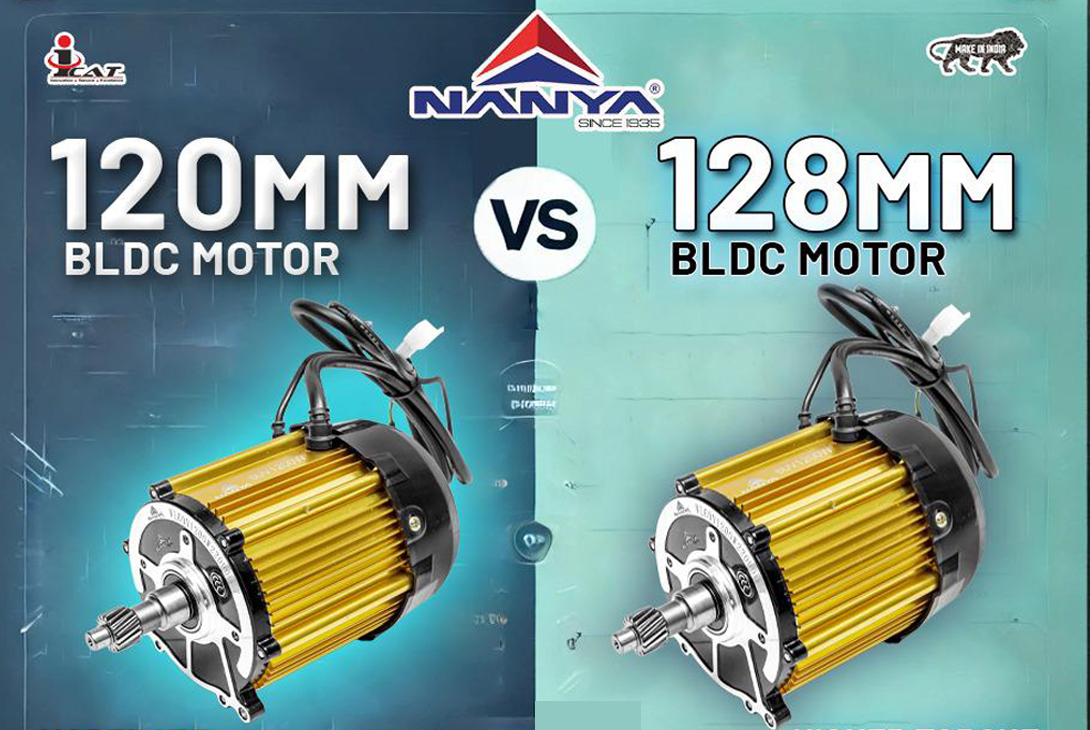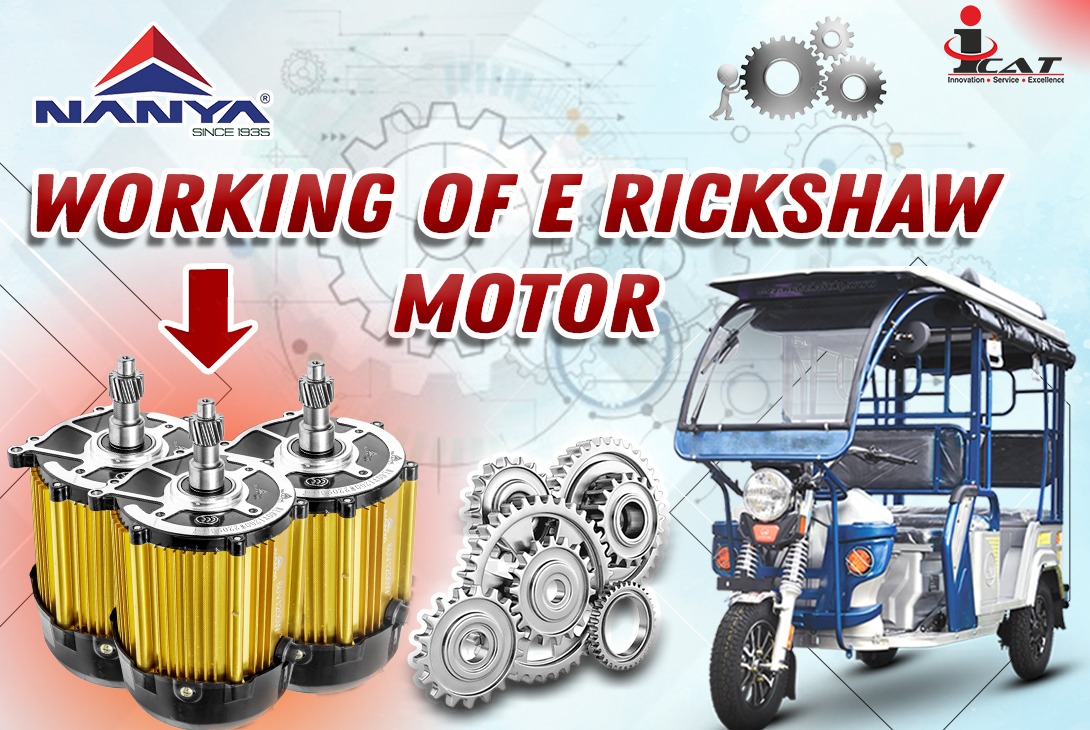


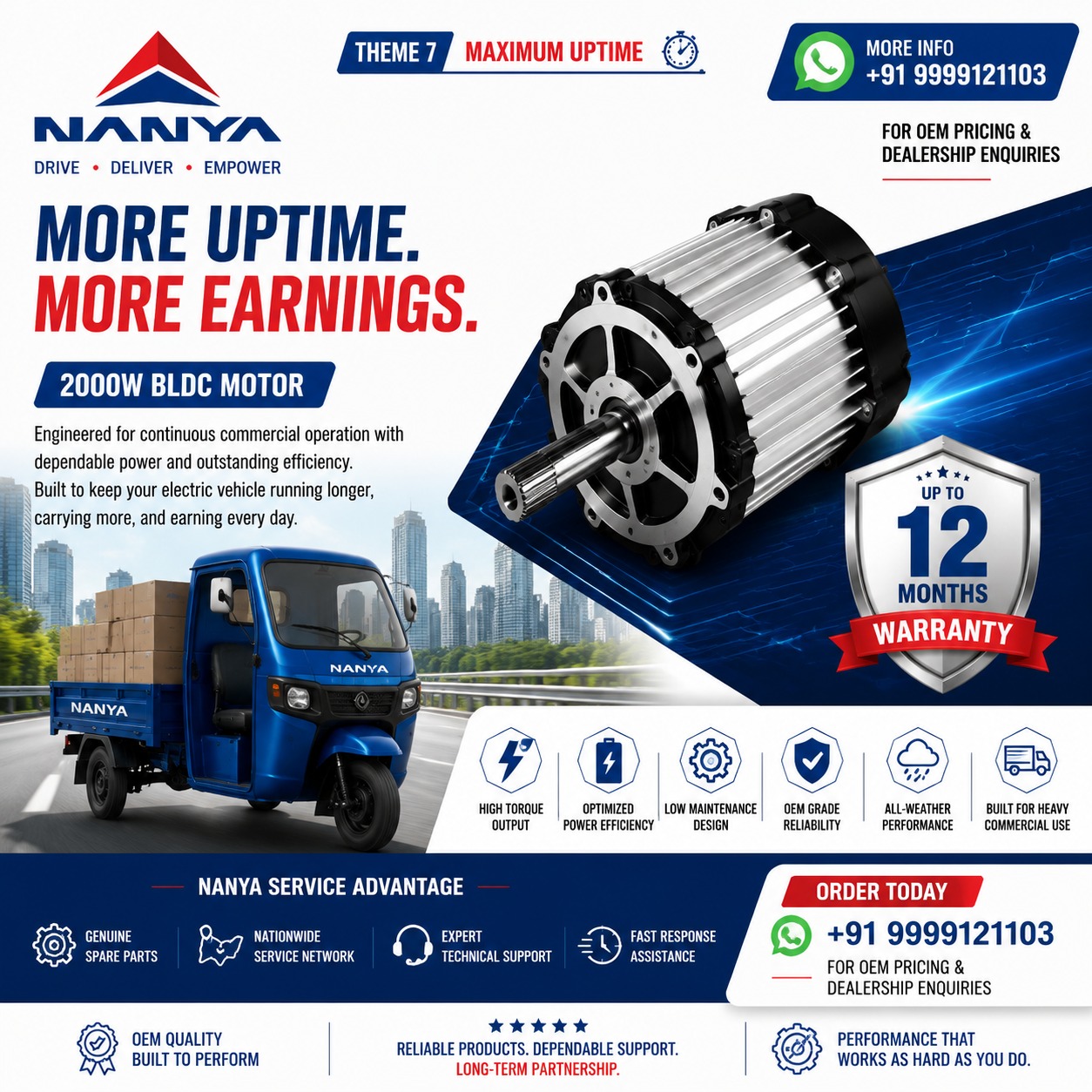
Electric vehicles are becoming more powerful, efficient, and reliable than ever before. At the heart of this transformation is the BLDC motor for electric vehicle applications. Whether you’re building an electric scooter, e-rickshaw, e-bike, or commercial EV, understanding how a BLDC motor works can help you make better purchasing and design decisions.
This guide explains the working principle of a BLDC motor, its benefits, types, applications, and the key factors to consider when selecting the right motor for your vehicle.
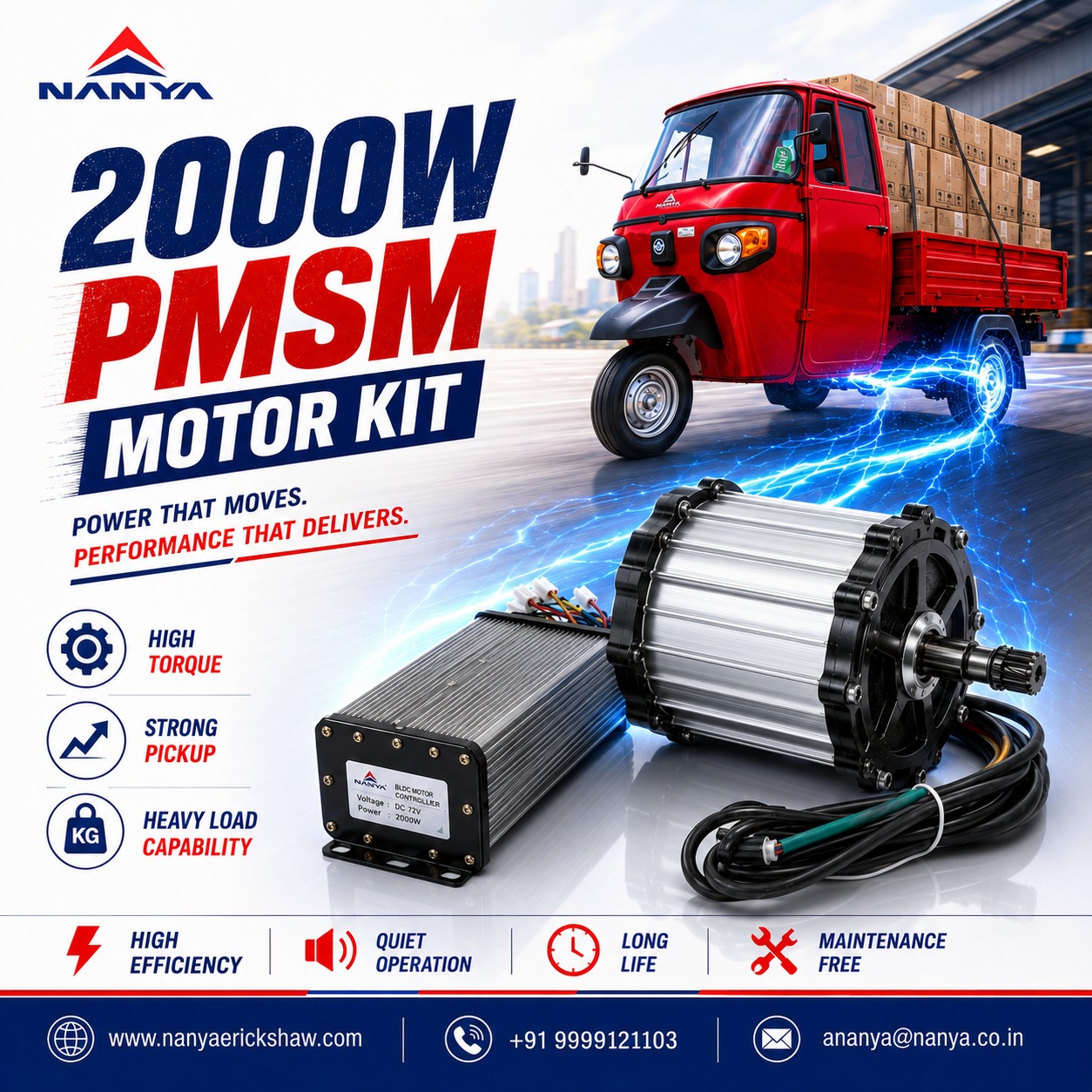
A Brushless DC (BLDC) motor is an electric motor that operates without mechanical brushes. Instead of brushes and a commutator, it uses an electronic controller to switch current between stator windings, creating a rotating magnetic field that drives the rotor.
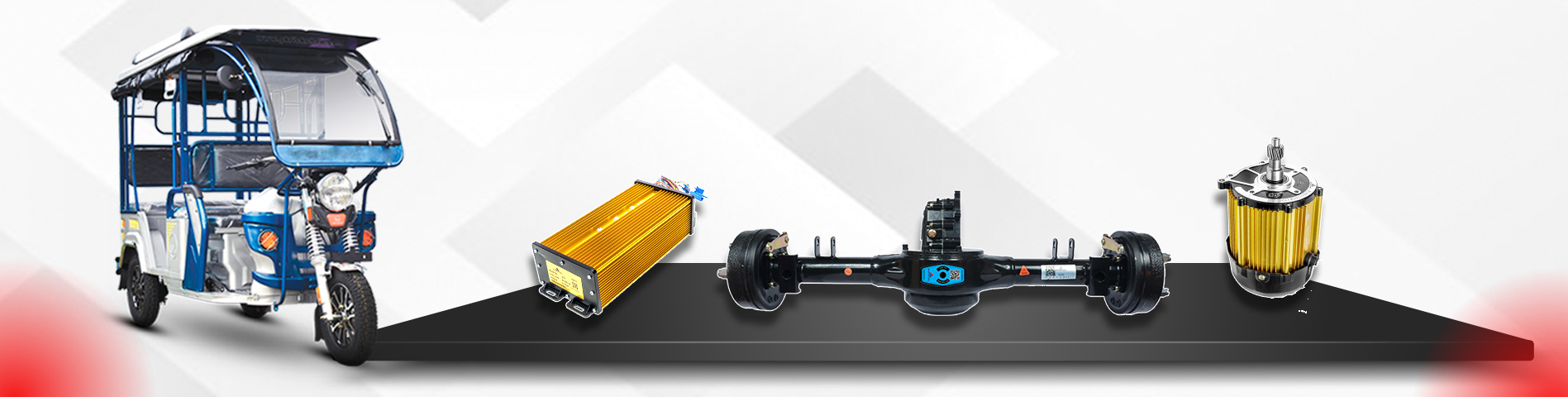
The motor consists of three main components:
· Stator – Copper windings that generate a rotating magnetic field.
· Rotor – Permanent magnets attached to the rotating shaft.
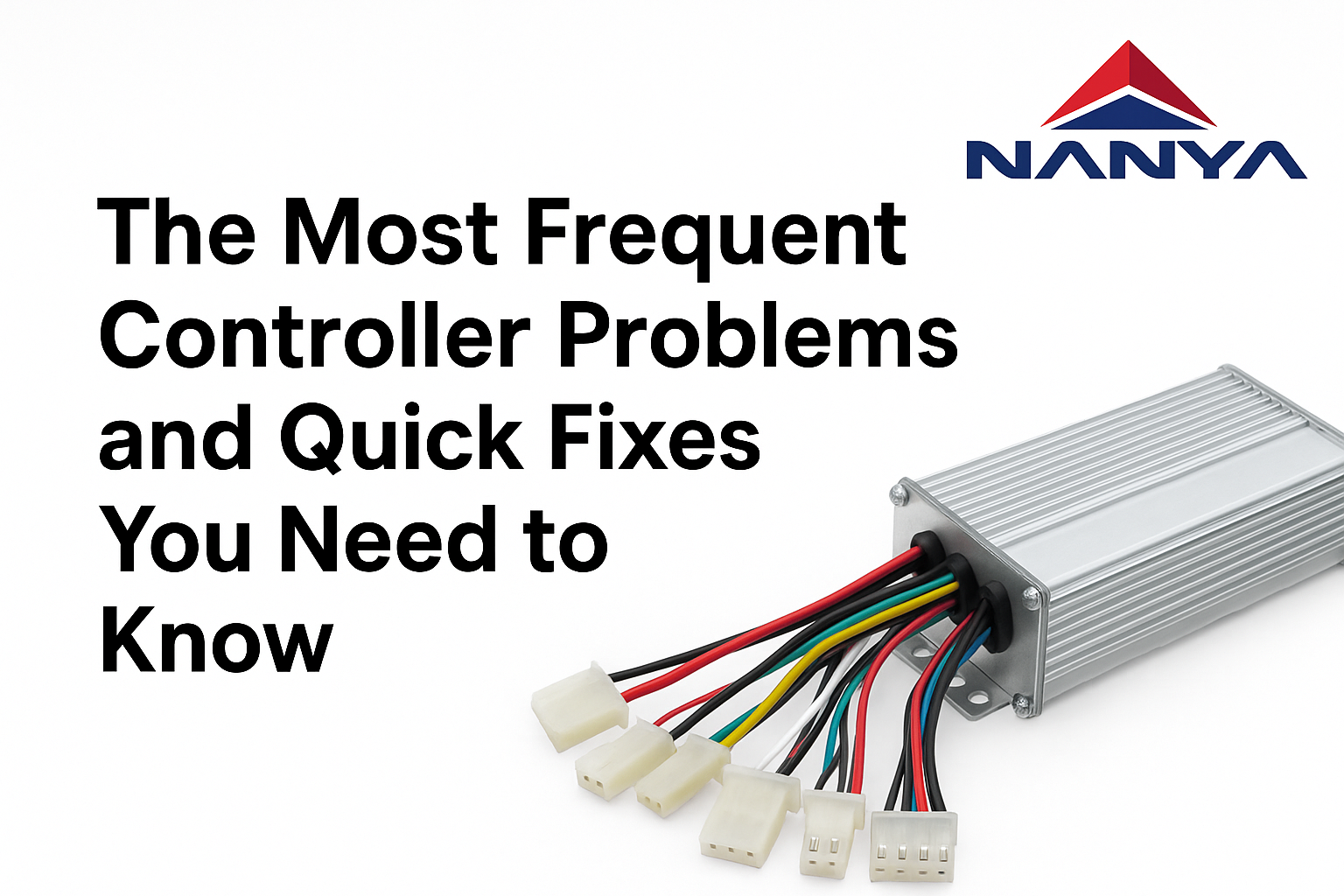
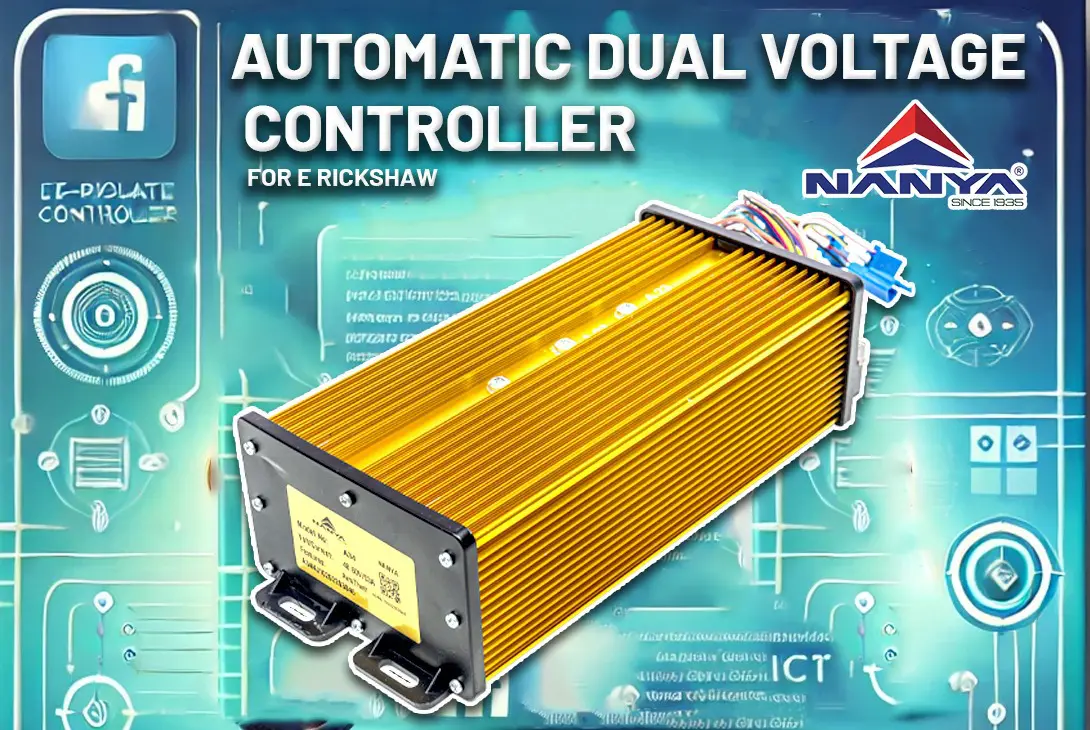
· Electronic Controller – Controls the current supplied to the stator for smooth and efficient operation.
Because there are no brushes to wear out, BLDC motors require less maintenance and provide higher reliability than conventional brushed motors.
The operating principle is simple:
Battery
│
▼
Motor Controller
│
▼
Stator Windings
(Rotating Magnetic Field)
│
▼
Permanent Magnet Rotor
│
▼
Wheel / Transmission
1. The battery supplies power to the motor controller.
2. The controller energizes the stator windings in sequence.
3. This creates a rotating magnetic field.
4. Permanent magnets in the rotor follow this rotating field.
5. The rotor turns continuously, producing mechanical power that drives the vehicle.
Unlike brushed motors, electronic commutation replaces mechanical brushes, resulting in smoother operation and lower maintenance.
Well-designed BLDC systems often achieve efficiencies above conventional brushed DC motors. Actual efficiency depends on motor design, controller quality, operating speed, load, and cooling.
BLDC motors deliver strong torque from low speeds, making them ideal for city traffic, hill climbing, and frequent stop-and-go driving.
Since there are no brushes to replace, maintenance requirements are significantly reduced.
Electronic commutation minimizes mechanical noise, creating a smoother and quieter driving experience.
Reduced mechanical wear contributes to a longer operating life when the motor is properly matched with its controller and operated within its design limits.
|
Feature |
BLDC Motor |
Brushed DC Motor |
PMSM |
|
Brushes |
No |
Yes |
No |
|
Maintenance |
Low |
High |
Low |
|
Efficiency |
High |
Moderate |
Very High |
|
Noise |
Low |
Higher |
Low |
|
Speed Control |
Excellent |
Good |
Excellent |
|
Cost |
Medium |
Low |
Higher |
|
Best Use |
EVs, e-bikes, e-rickshaws |
Low-cost applications |
Premium electric cars and high-performance EVs |
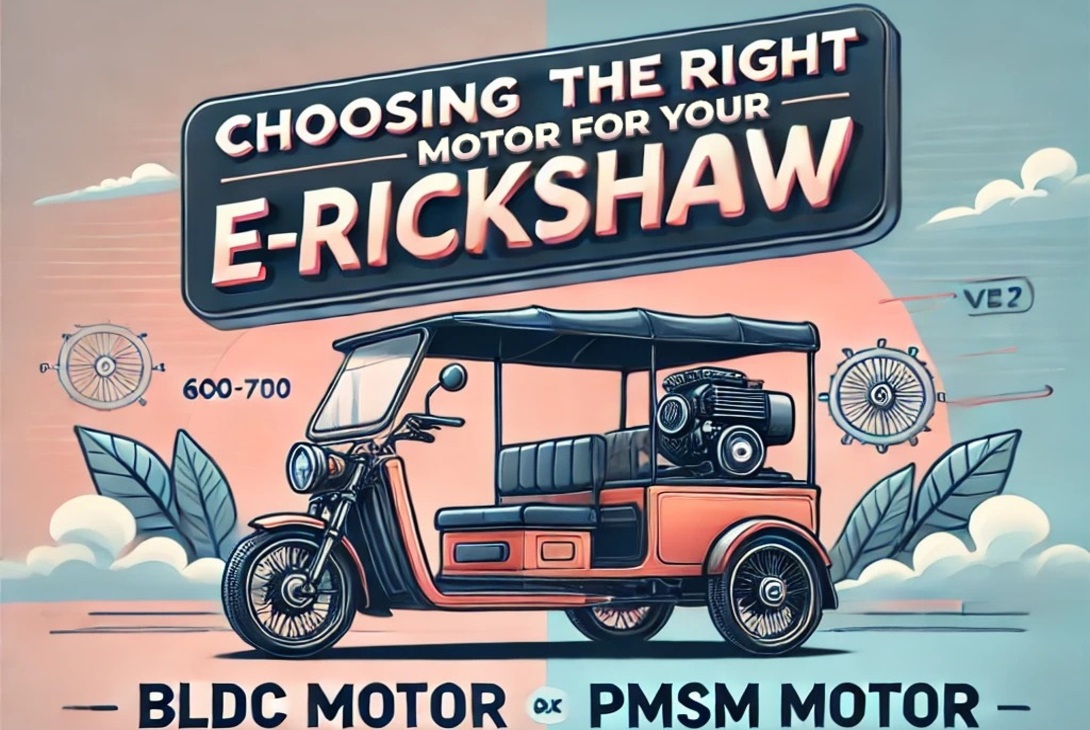
Permanent Magnet Synchronous Motors (PMSMs) are often preferred for premium passenger EVs because they can provide smoother operation, excellent power density, and high efficiency over a wide operating range. However, BLDC motors remain an excellent choice for many two-wheelers, three-wheelers, light commercial EVs, and industrial electric vehicles due to their balance of performance, reliability, and cost.
A hub motor is integrated directly into the wheel.
Best for:
· Electric bicycles
· Lightweight electric vehicles
· Compact design
· Easy installation
· Low maintenance
· Quiet operation
Mounted near the center of the vehicle and connected to the drivetrain.
Best for:
· High-torque applications
· Hill climbing
· Commercial electric vehicles
· Better weight distribution
· Higher torque
· Improved climbing performance
Uses a gearbox to increase torque.
Best for:
· E-rickshaws
· Cargo vehicles
· Utility EVs
· Industrial electric vehicles
BLDC motors are widely used in:
· Electric scooters
· Electric bikes
· Electric motorcycles
· Delivery vehicles
· Electric golf carts
· Industrial automation
· Robotics
· Medical equipment
· Agricultural electric vehicles
Their versatility makes them one of the most widely adopted motor technologies in modern electric mobility.
Selecting the correct motor involves more than choosing the highest power rating.
Use this checklist before purchasing:
Choose a motor designed for your specific application, whether it’s an e-bike, e-rickshaw, scooter, or commercial EV.
Ensure the motor matches your battery system (24V, 48V, 60V, 72V, or higher).
Select a motor with sufficient continuous and peak power for your application.
Consider passenger load, cargo weight, road conditions, and hill-climbing requirements.
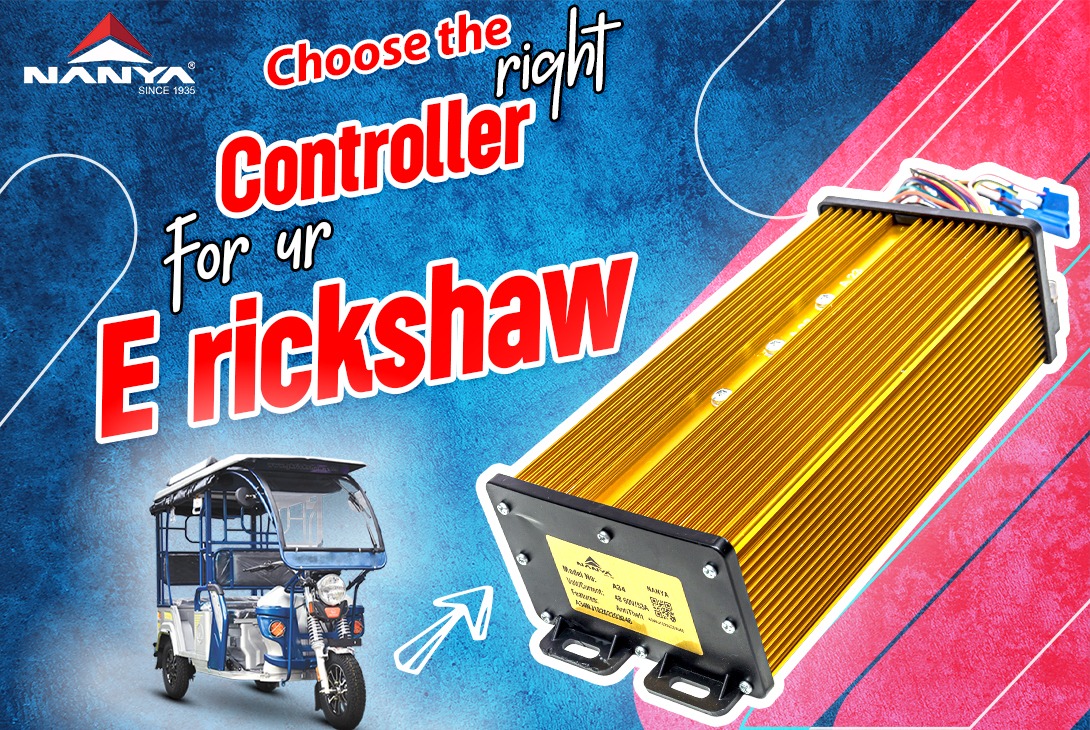
Verify that the controller supports the motor’s voltage, current, Hall sensors (if used), and communication requirements.
Estimate the maximum load the vehicle will carry to avoid underpowered or oversized motor selection.
For demanding environments, consider motors with appropriate cooling and ingress protection (IP) ratings.
Reliable technical support and warranty coverage can reduce downtime and maintenance costs.
A BLDC motor is a brushless electric motor that uses an electronic controller instead of brushes to control rotation.
For most EV applications, yes. BLDC motors generally offer higher efficiency, lower maintenance, quieter operation, and longer service life.
Yes. Geared and mid-drive BLDC motors are commonly used in e-rickshaws because they provide the torque required for passenger and cargo transport.
Yes. A BLDC motor requires an electronic controller to energize the stator windings in the correct sequence.
Choose based on vehicle type, battery voltage, required torque, power rating, controller compatibility, and expected load.
BLDC motors have become the preferred choice for many electric vehicles because they combine efficiency, reliability, low maintenance, and excellent performance. Whether you’re designing a new EV or upgrading an existing one, understanding how these motors work and selecting the right specifications can improve vehicle performance and reduce operating costs.
Rather than focusing only on price, consider factors such as voltage compatibility, torque, controller matching, and application requirements to ensure long-term reliability.
No FAQs available for this blog.